In the fall of 2013, our event series “Peace in West Africa” discussed the crisis in Mali and the wider region. Over three evenings, we looked at the causes, actors, and consequences of the conflict – all the way to Berlin.
What it was about
The military coup in Mali in March 2012 and the war in the north of the country had left deep scars: weakened state structures, poverty, human rights violations, and displacement. We wanted to inform people in Berlin about the background so that they could get involved themselves.
We invited organizations and associations, embassies, churches and mosques, the African diaspora, and anyone interested. The aim was for everyone to engage in peaceful dialogue and develop concrete proposals for solutions together. Back in 2012, our first development education project, the series “Security Issues in Northwest Africa,” had already featured three panel discussions on conflicts in the region.
The three evenings
- October 24 The role of the African Union and the Economic Community of West African States (ECOWAS) in the regional peace process Introductory film “Sahel calling,” followed by a panel with experts in policy advice and development economics
- November 1 The risk of destabilization in North and West Africa: conflicts, potential for conflict, and prospects for lasting peace in the region Opening input by a political scientist from Freie Universität Berlin; panel with a former German ambassador in Bamako and the spokesperson of the SPD Berlin’s expert committee on international policy, peace, and development
- December International dimensions of the crisis: prospects for sustainable peacebuilding in the region with a focus on the refugee camp at Oranienplatz in Berlin-Kreuzberg
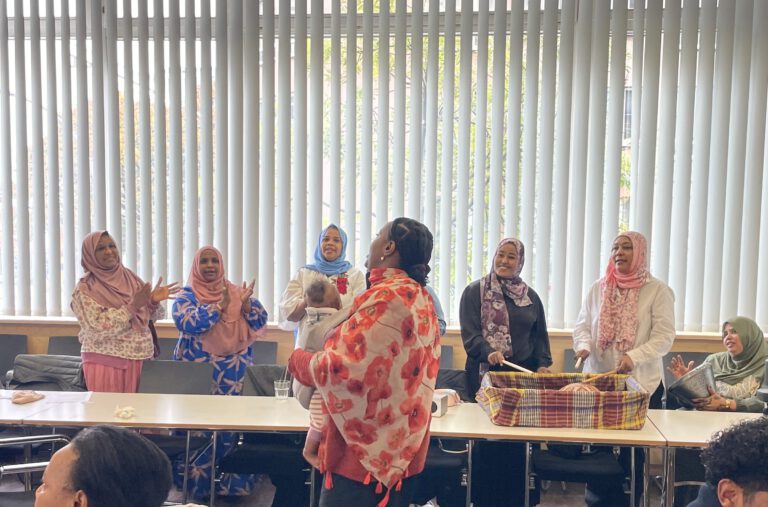
The evenings at Afrika Haus in Moabit each began at 6:30 p.m. with a reception with coffee, cake, and snacks. This was followed by a welcome, an opening input, and a panel discussion. NARUD e.V. was involved in moderating. The programs carried our motto at the time: “Peace, Help, and Brotherhood.”
Questions of the first evening
- Are the structures of the African Union and ECOWAS up to date?
- What potential do these organizations have?
- Why do they fail in their role?
What we discussed
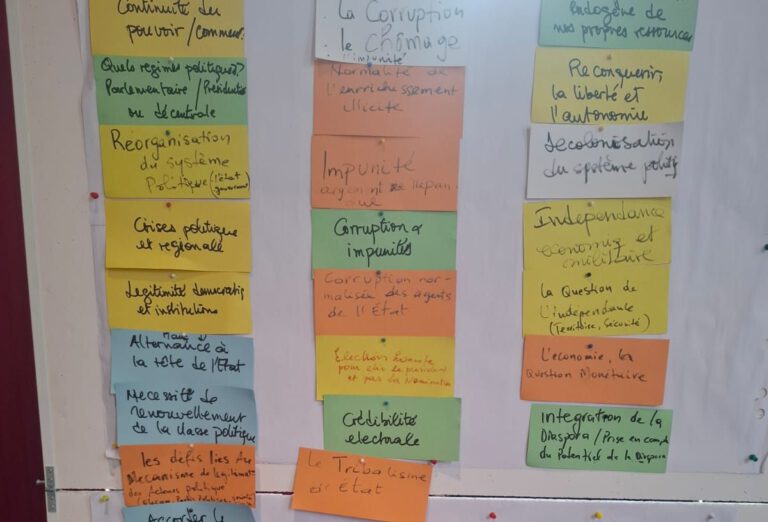
On the last evening, the focus was on the causes of the crisis in Mali: the legacy of slavery and colonialism, the situation of the Tuareg in the north, the war in Libya, and the interest in the region’s raw materials. One key message was:
Mali’s problems cannot be solved by military means.
Conclusion of the third evening
What is needed instead is a smart development policy accompanied by education. The situation of the refugees at Oranienplatz was also discussed: those affected described their situation in their own words. The panel also addressed the residence obligation (Residenzpflicht) and the right to work for refugees in Germany.
We completed the project at the end of 2013. The following year, we took up the topic again with our symposium “Hèrè Dòròn! – Only Peace in Mali.”