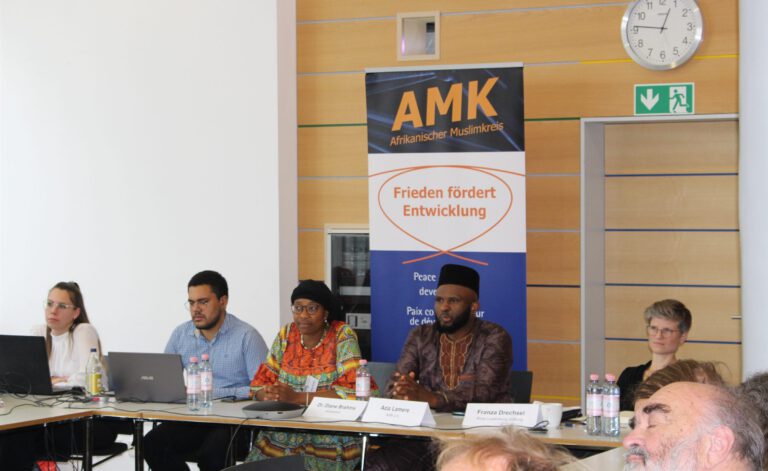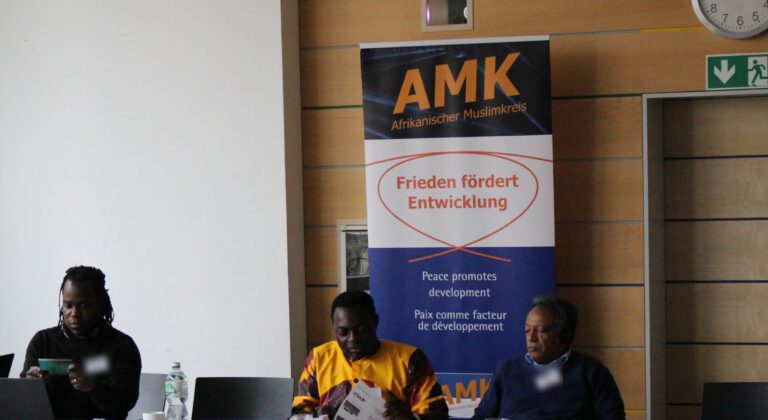
War had been raging in Sudan for more than a year – and the world was looking away. At our symposium on September 28, 2024, at the Kurt-Schumacher-Haus, we asked together with experts and many representatives of the Sudanese diaspora: How can the war be ended?
about 70
participants on site, more via Zoom
5
keynote talks in the morning
What it was about
In 2019, Sudan’s long-standing dictator Omar al-Bashir was overthrown. A transition to democracy and stability seemed possible. But in April 2023, war broke out between the army and the RSF militia – at the expense of the population.
When we sent out the invitations to the symposium, 26 million people were suffering from hunger, and millions were fleeing atrocities. Even hospitals and schools were being destroyed. How could it come to this?
This symposium was the first of two in our two-year project “Peace and Development in Sudan: Are There Ways Out of the Nightmare?” The project explored why democratization failed after 2019 and looked for ways out of the civil war.
Key questions
- What could a lasting solution to the conflict look like – and how can it be initiated?
- How can reconstruction, stabilization, and democratization begin in a sovereign Sudan?
- How can women’s organizations and young people, who played a particularly active role in overthrowing the old regime, effectively drive change?
- How can the Sudanese diaspora in Germany and the German government support this?
The program
The symposium took place in person and on Zoom, with simultaneous German–English interpretation.
- 9:45 a.m. Arrival
- 10:00 a.m. Welcome by AMK e.V.
- 10:10 a.m.–1:30 p.m. Five keynote talks with short discussions
- 1:30 p.m. Lunch break with African buffet
- 2:00–4:00 p.m. Panel discussion, followed by an open discussion with the audience with the speakers and other guests, including the chair of Sudanclub e.V. (Salam Sudan Campaign) and a researcher from the Stiftung Wissenschaft und Politik (SWP)
The keynote talks
- The history of the conflict and the consequences of colonialism – a professor from the Subsahara Centre in Canada
- Sudan’s geopolitics, its neighbors, and external powers of influence – a former Ambassador of Sudan
- The role of women’s organizations – a Sudanese women’s rights and human rights activist
- The role of young people – a representative of the National Movement for Building and Development (NMBD)
- The war in Sudan and Germany’s suppressed responsibility – a historian and Sudan expert
What we took away
The day examined the conflict from many angles: historically, geopolitically, and with a view to gender and generations. Special attention went to the role of women and young people in rebuilding the country.
The discussion called for a ceasefire on the basis of the Jeddah protocol and for greater involvement of civilian actors.
What came next
In their feedback, guests asked for more time for discussion and for further topics: ethnic conflicts and national identity, a look at all the actors involved inside the country, in the region, and internationally, and lessons from conflicts that have been ended elsewhere.
One year later, our second symposium on Sudan followed: “Sudan in an Ongoing Nightmare – How Can the Forgotten War Be Ended?”
The symposium was funded by Engagement Global on behalf of the German Federal Ministry for Economic Cooperation and Development (BMZ) and by the Berlin Senate Department for Economics, Energy and Public Enterprises.