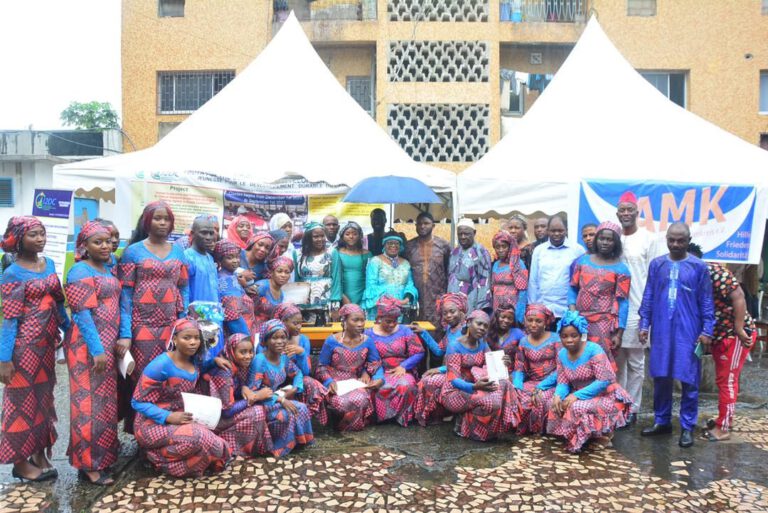
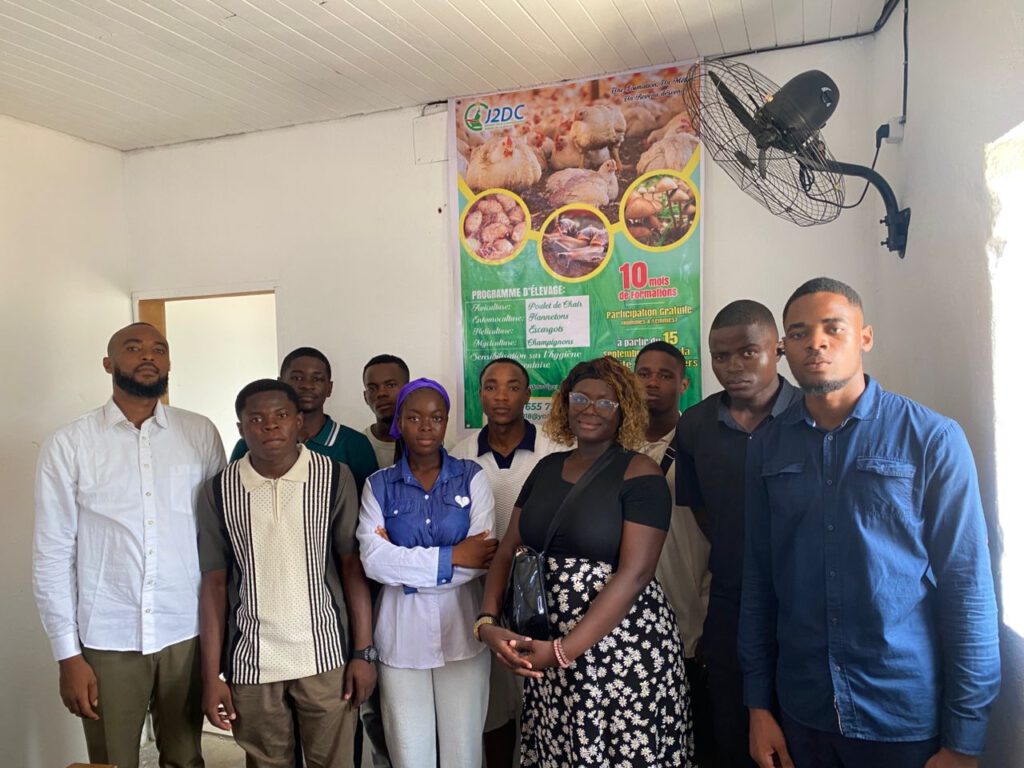
From August 2025 to July 2026, together with our partner association J2DC, we trained 60 young people in Douala and Foumban in modern small-livestock farming and feed production, including 25 women and 20 internally displaced people. We supported them on their way to self-employment. The project builds on our motorcycle mechanics training in Douala and Foumban.
60
young people trained
12
months of theory and practice
10
groups with their own production
70
hours of awareness-raising on the radio
The starting point
In Douala and Foumban, tens of thousands of disadvantaged young people, women, and internally displaced people do not earn enough to live on. Unemployment is high and affects qualified people too.
Training in modern small-livestock farming is out of reach for many: it is expensive, opportunities are rare, and women are pushed to the margins in some sectors. At the same time, the region depends heavily on food imports. Small-livestock farming needs little start-up capital, creates income, and improves the local food supply.
How the project worked
A new training building in Foumban
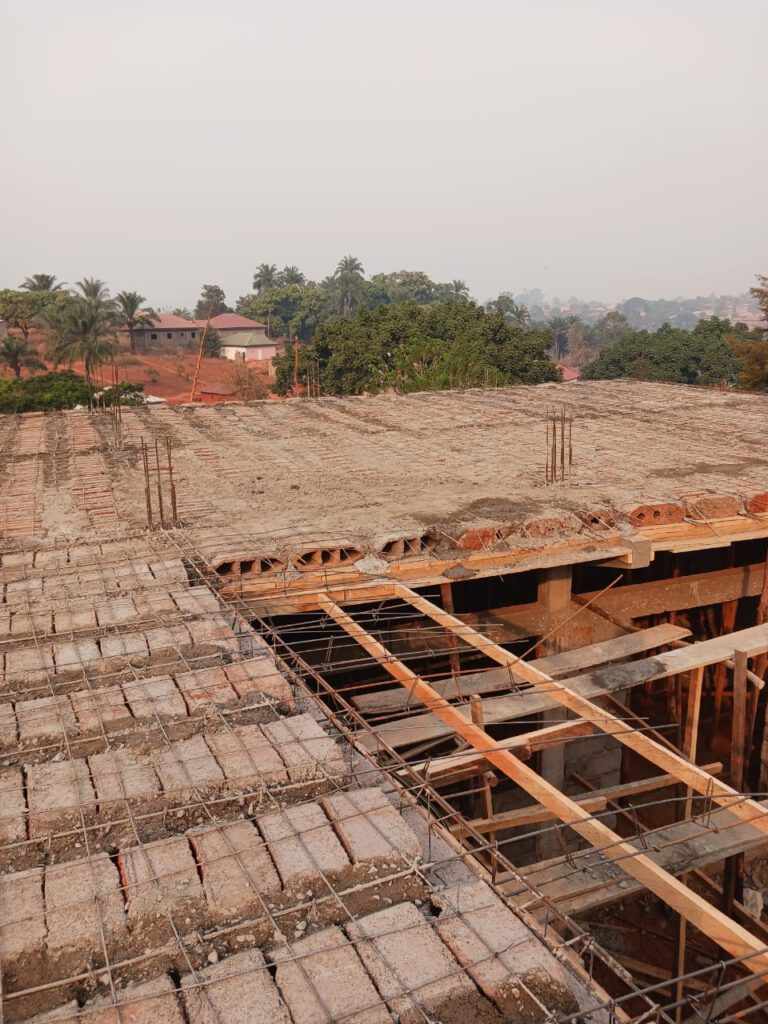
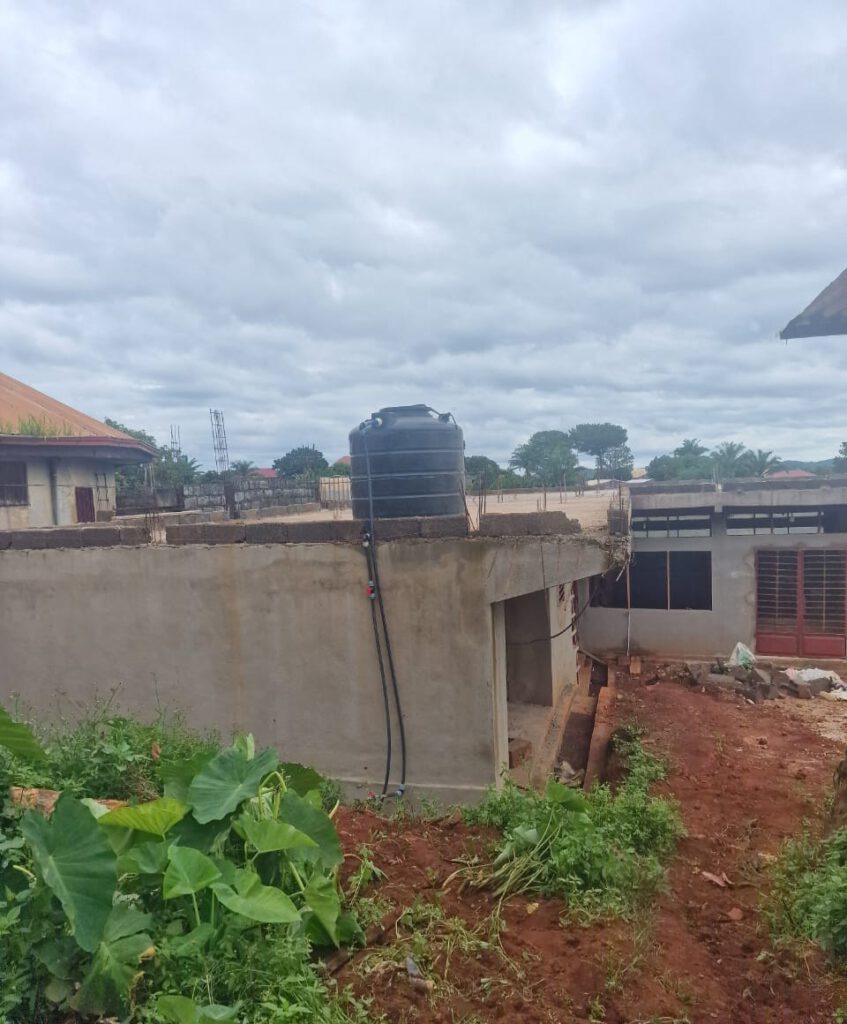
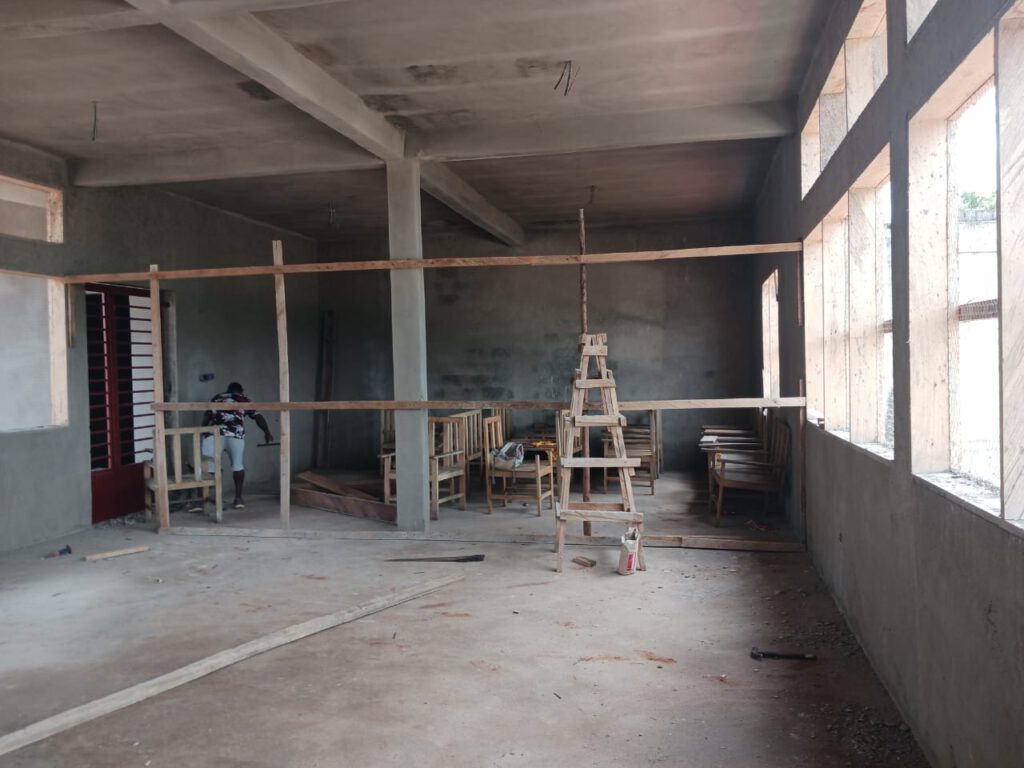
On J2DC’s grounds in Foumban, a single-story building with a floor area of around 300 m² has been built from regional materials. It has a classroom for theory, a 220 m² practical area for poultry, snails, and May beetle larvae, and rooms for administration and storage.
A solar power system bridges the frequent power outages. A new deep well with a solar pump secures the water supply.
Training in modern small-livestock farming
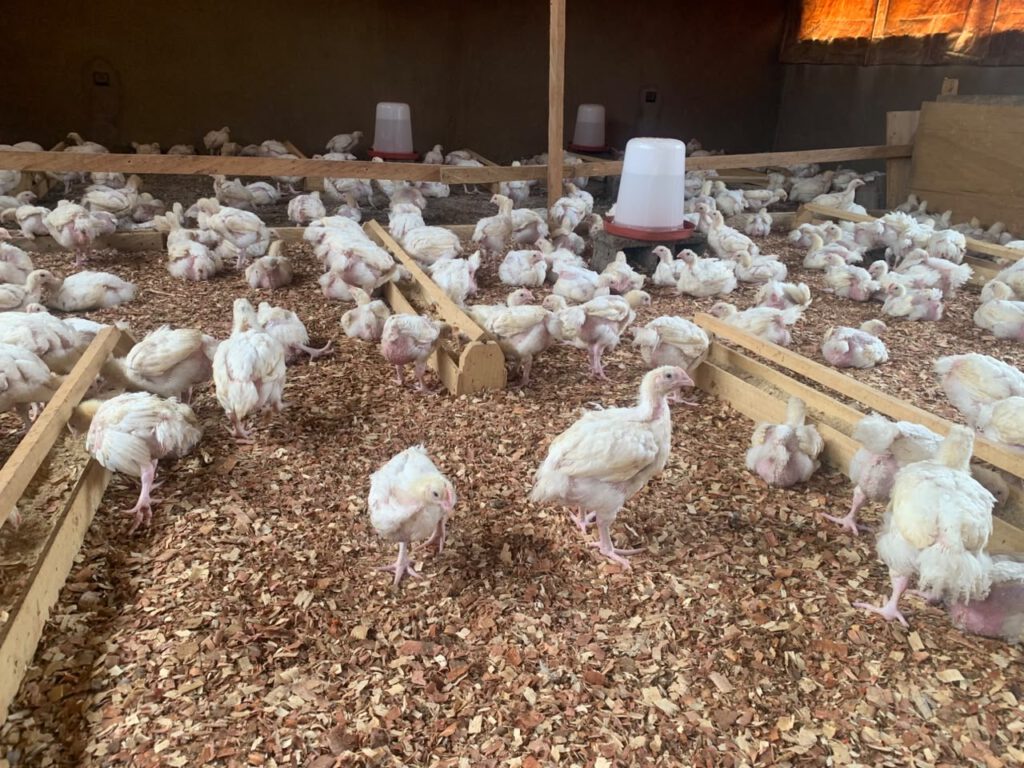
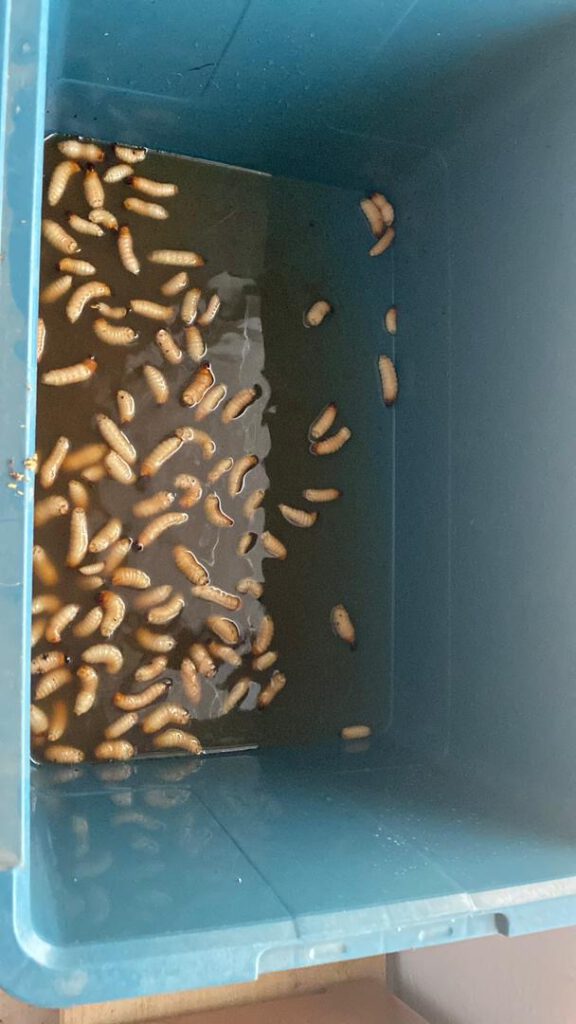
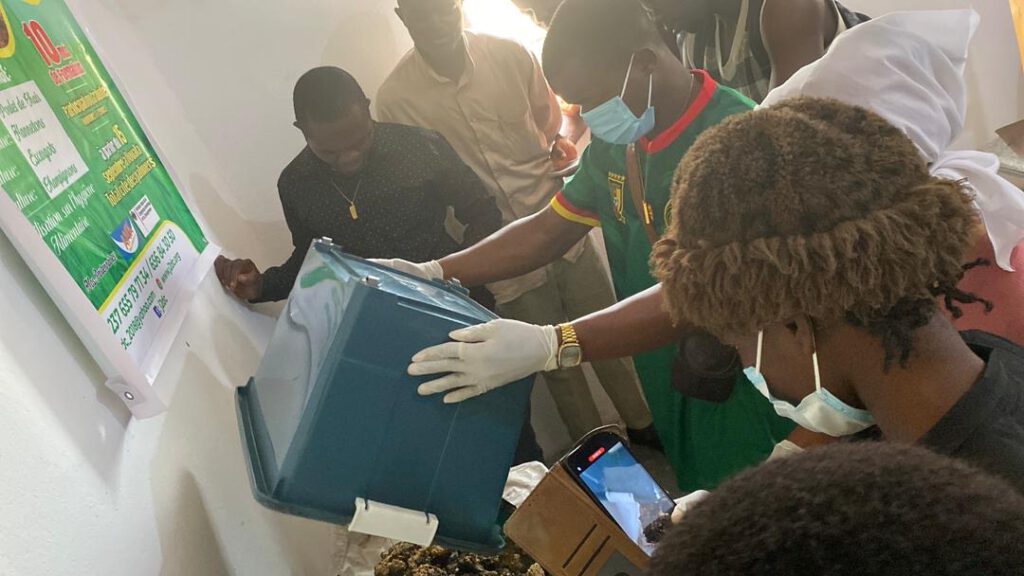
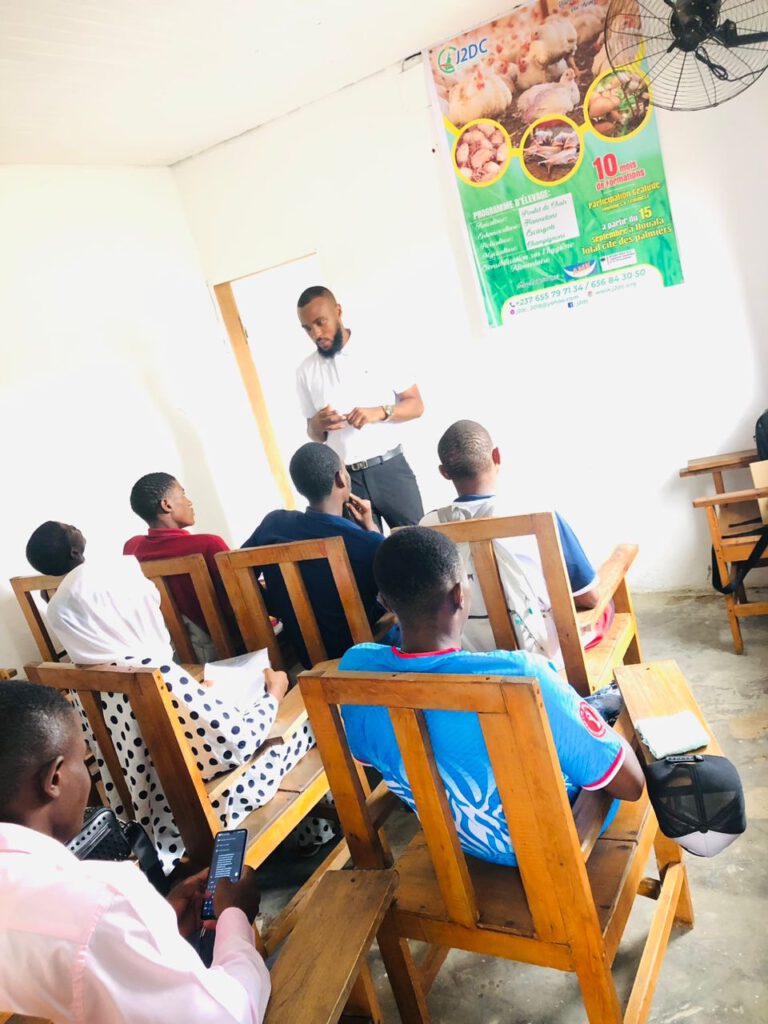
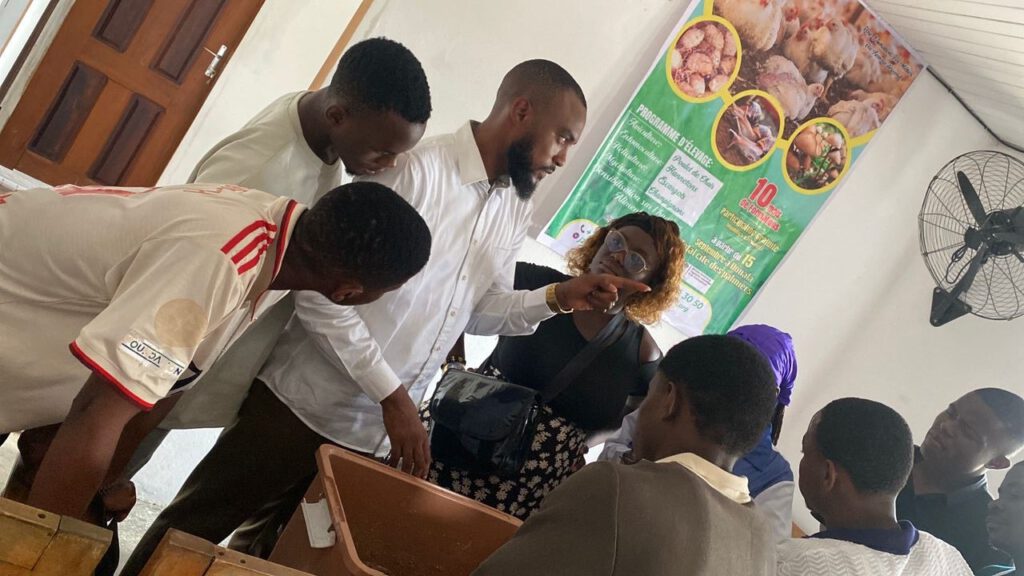
For twelve months, the participants learned in theory and practice what they need for their own production: raising broilers and keeping laying hens, vaccination schedules, hygiene, and disease prevention, as well as making feed from local corn and soy. They also learned to breed snails and May beetle larvae and to grow mushrooms – niches that require little start-up capital.
Forty participants trained in Foumban and 20 in Douala, on our partners’ farms. At the end, the graduates, divided into ten groups, received starter kits with chicks and starter feed. J2DC supports the groups for up to a year with monthly visits.
Raising awareness of food safety
An awareness campaign with a total of 70 hours of airtime ran on the radio stations MANDJARA in Foumban and DASH in Douala. It covered safe, locally produced food, how to recognize chemically treated meat at the market, and infections caused by meat processed under unhygienic conditions.
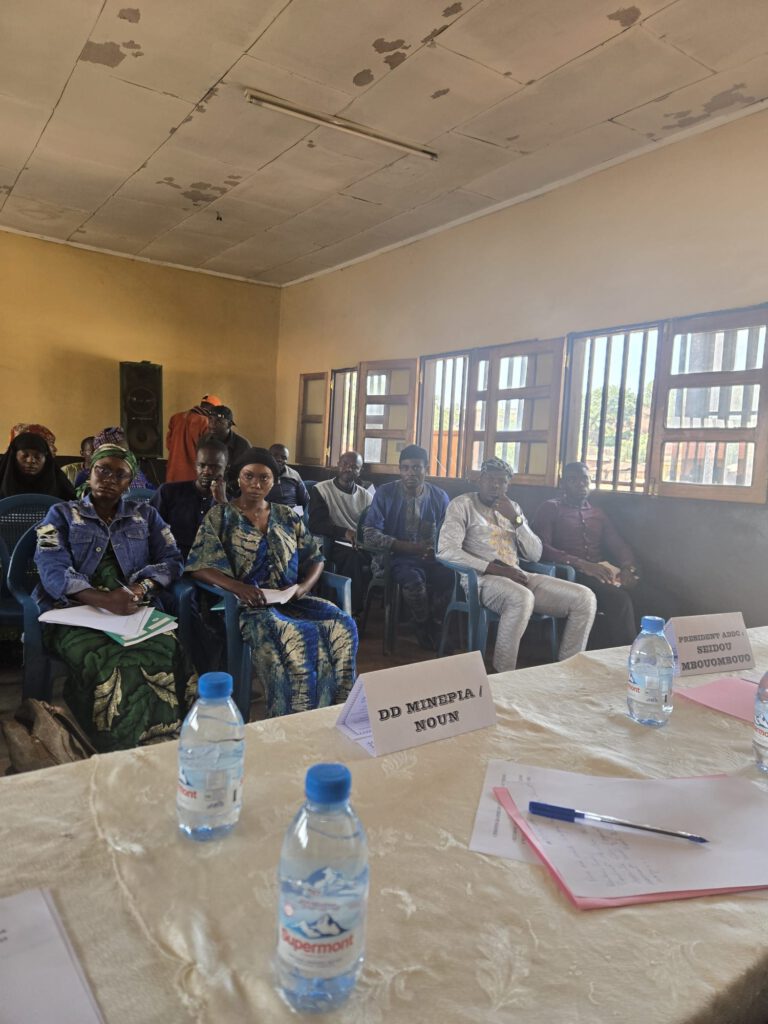
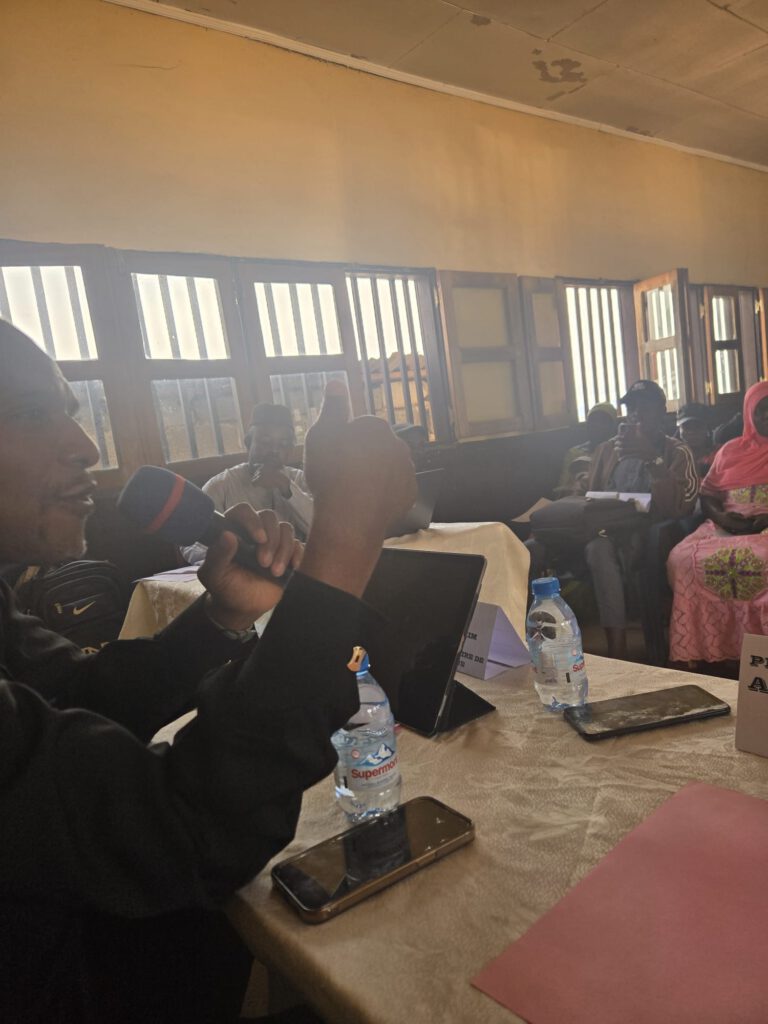
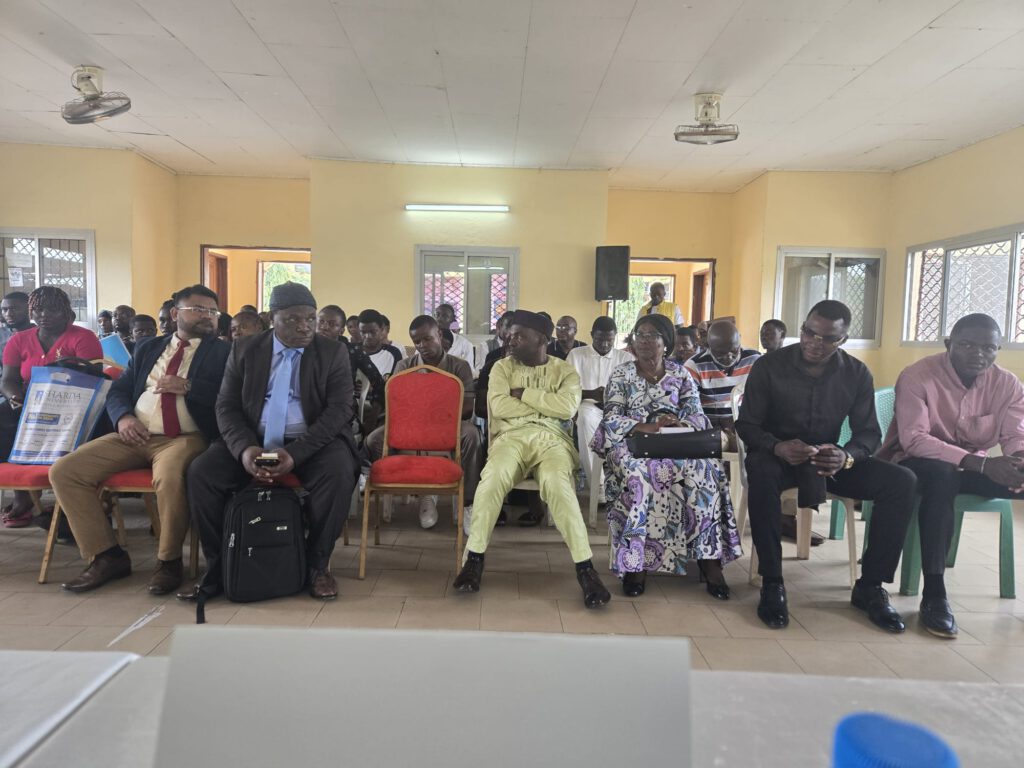
In addition, there were two workshops on “Food Safety and Human Health” with representatives of Cameroon’s Ministry of Livestock (MINEPIA), breeders, traders, and consumers. Awareness-raising work also took place at the slaughterhouse and the central market in Foumban.
Advice for business founders
Aspiring entrepreneurs, local producers, and members of common initiative groups (GICs) received training on starting a business and choosing a legal form, and on accounting and taxes. Marketing was another topic, especially through social media such as Facebook and TikTok.
Discovering rural prospects
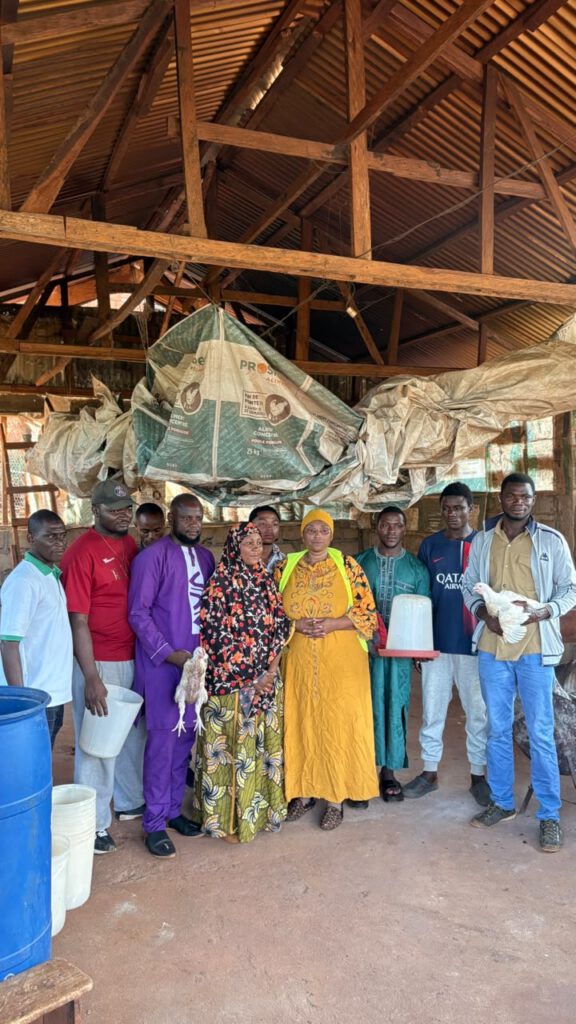
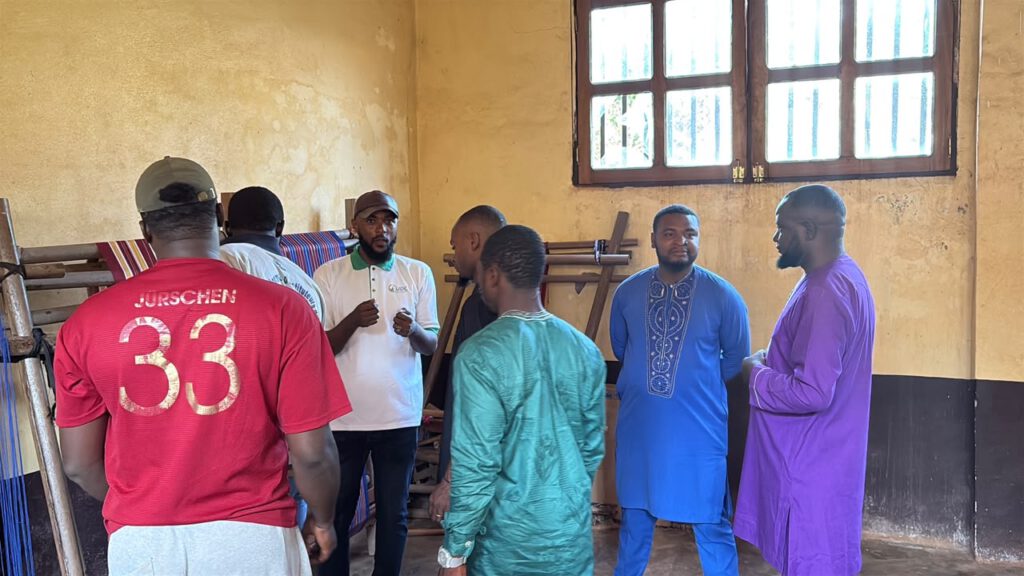
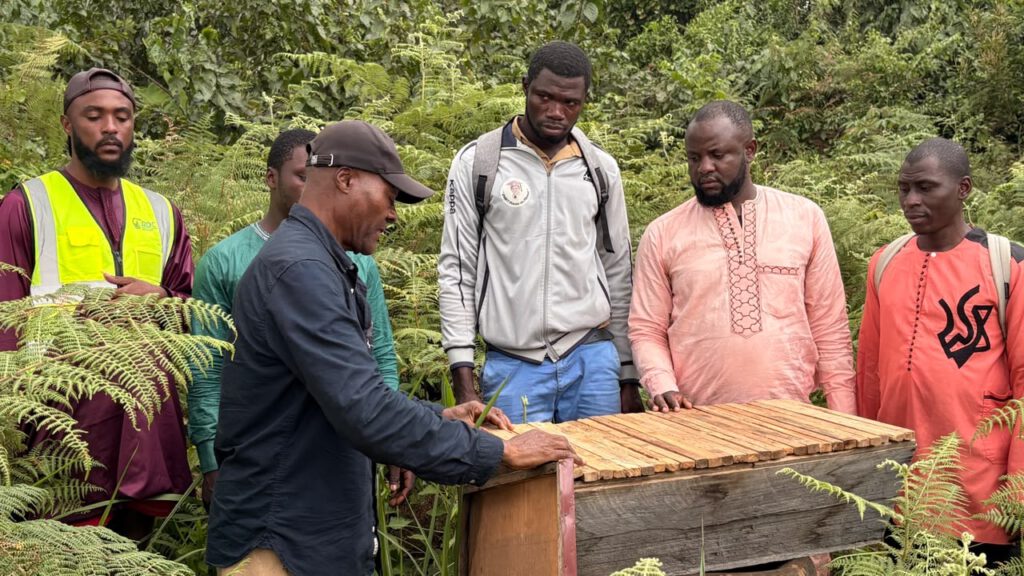
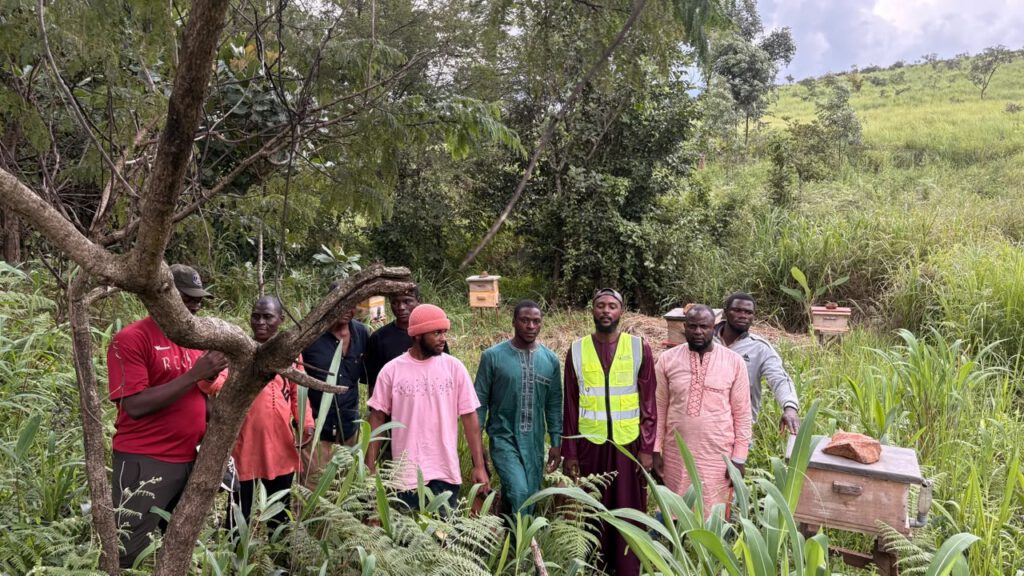
On study trips in and around Foumban, 20 young people from the city got to know educational institutions and successful small businesses, including a poultry farm, a traditional weaving workshop, and a beekeeping operation. Most of them can now imagine working in a rural area if a concrete opportunity arises there.
What we achieved
- 60 young people completed the training in modern small-livestock farming, including 25 women, 20 internally displaced people, and eight single mothers.
- 10 groups have set up their own production with their starter kits.
- 10 graduates work on J2DC’s new model farm, and two more on a veterinarian’s farm.
- More than 40 other people received advice on starting a business, taxes, and digital marketing.
- 20 young people from the city got to know rural areas on study trips.
- 284 people were reached directly through workshops and on-site activities, and around 37,000 through radio.
What happens next
The training building in Foumban remains in operation. J2DC runs it as a model farm focusing on poultry and, together with the vocational school CENSAMA, offers further courses in small-livestock farming there. Proceeds from sales are meant to cover running costs and wages.
In Berlin, we presented the project on June 24, 2026, at Mitte Town Hall – as part of the city partnership between the Mitte district and the city of Douala.
The project was funded through the small projects fund for development cooperation (EZ-Kleinprojektefonds) of the Stiftung Nord-Süd-Brücken (North-South Bridges Foundation) on behalf of the German Federal Ministry for Economic Cooperation and Development (BMZ).