In 2020, together with our partner organization ADDC, we launched a project for internally displaced people in the Noun department. It was meant to make it easier for them and other disadvantaged people to find their way into school, training, and work: with more space at a bilingual primary school, tailoring training in English, French courses, and counseling.
Displaced in their own country
In 2016, Cameroon was plunged into a deep crisis. Its roots go back to the colonial era: the former German colony was divided between France and Great Britain. After independence and reunification, the promised decentralization never came. The English-speaking population was marginalized politically and disadvantaged socially.
In 2016, peaceful protests began in the English-speaking regions, led above all by lawyers. Some separatists called for radicalization. The state responded with massive violence, curfews, and internet shutdowns in the Northwest and Southwest regions. All parties to the conflict have committed serious human rights violations. Separatists shut down state schools, and children and teachers were repeatedly kidnapped.
By 2020, more than 500,000 people had fled. Many reached the neighboring, French-speaking West region. There was no system there to coordinate their reception. Conflicts with the local population arose over scarce resources, often along with xenophobia. For the displaced, finding work or sending their children to school was hardly possible.
The situation in Bangourain and Foumban
Many single parents and unaccompanied minors got only as far as the towns near the border, and a particularly large number ended up in Bangourain, which normally has around 15,000 inhabitants. In purely French-speaking schools, the children would be at a severe disadvantage. So they crowded into the public bilingual primary school. Of its roughly 450 pupils, at least 250 were displaced. The classrooms were so full that parents in the neighborhood offered their homes for lessons – not a long-term solution.
Older displaced people moved on to Foumban, the center of the region, in search of work. There, tailoring offers a relatively secure way to earn one’s own money. At its vocational school CENSAMA in Foumban, ADDC has been training tailors since 2017.
What the project planned
More space at the primary school
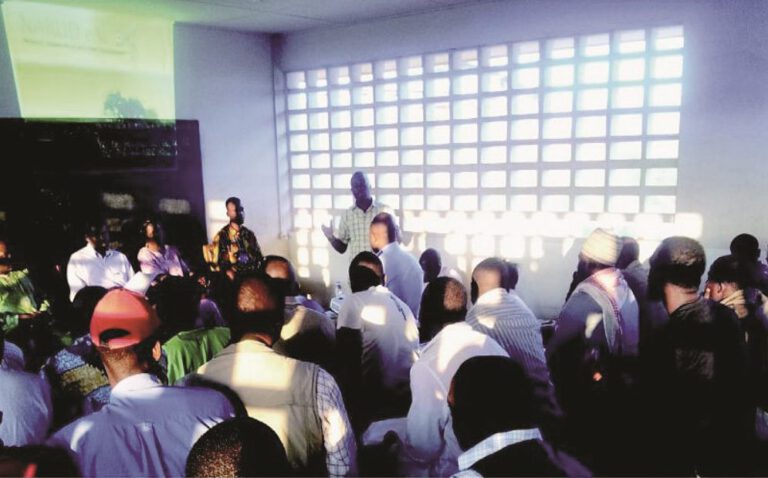
An additional building on the school grounds in Bangourain with two separate classrooms, furniture, and more sanitary facilities. Plus new teachers for the 2020/21 school year, at least one of them with English as their main language. Meetings with displaced and local parents were to open the parents’ association to newcomers and create a hardship policy for orphans and particularly hard-hit families.
Tailoring training in English
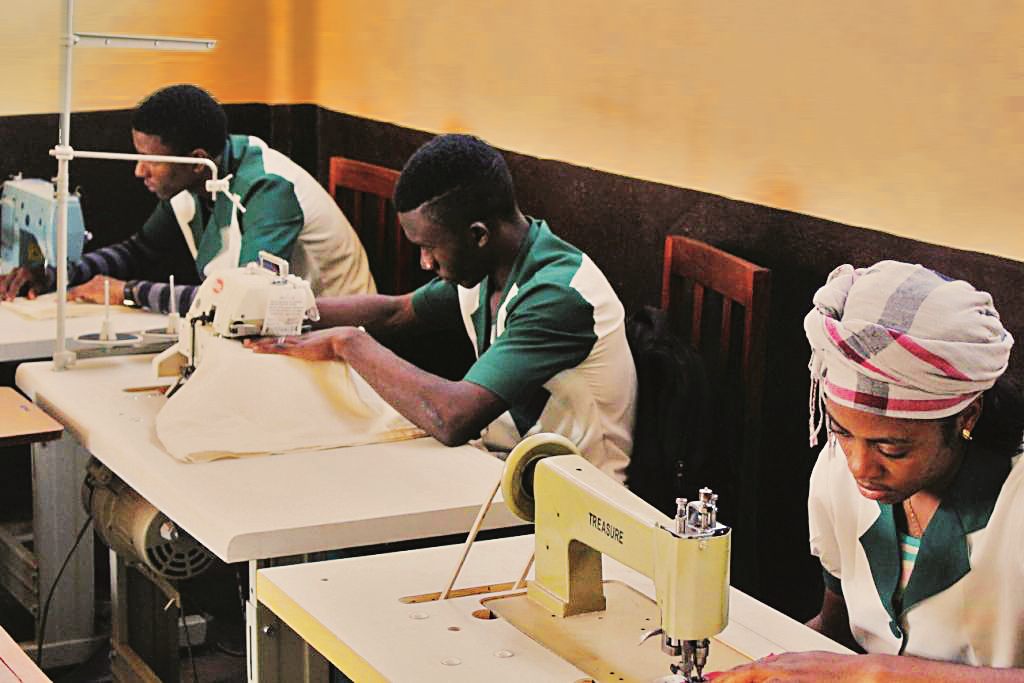
An additional training course at the vocational school in Foumban: taught entirely in English, practice-oriented, and free of charge, and also open to disadvantaged local people. The curriculum covers market-ready clothing, repairing sewing machines, and arithmetic for tailoring. After ten months, graduates receive a sewing machine and tools to start working.
French courses
Two free courses under professional instruction for a total of 70 young people and adults, focused on work and everyday life. They are also open to local people who usually speak mainly their native language and want to improve their French.
Educational and career counseling
An experienced social education professional offers counseling at least twice a week in an office at the vocational school. They put people seeking advice in touch with local businesses so that they can get to know occupations in practice. A flyer in English lists the office hours.
Even during the project, it became clear that these offerings contribute to better education, less poverty, and greater integration.
Displaced people, not refugees
After talking with members of the target group, we speak of internally displaced people rather than internal refugees in the case of Cameroon. It was no longer possible to reflect this change in the original German project title.
The project was funded by the Stiftung Nord-Süd-Brücken (North-South Bridges Foundation) on behalf of the German Federal Ministry for Economic Cooperation and Development (BMZ).